Fish's Cozy MKIV
  • Welcome
  • Preparation, Visits, Tips
    • Preparation
    • Visits
    • Tips and Tricks
    • Special Cases - Interesting Fixes
  • Chapters 3-15
    • Ch 3 Practice
    • Ch 4-7 Fuselage, Main Gear
    • Ch 8 Head Rest, Heat Duct, Seat Belts
    • Ch 9 Main Landing Gear
    • Ch 10-12 Canard & Elevators
    • Ch 13 Nose >
      • Ch 13.1 Nose gear, Brakes, Landing Light and Skid Plate
      • Ch 13.2 Nose Top & Canard Cover
      • Ch 13.3 Relevant Later Work
    • Ch 14 Spar
    • Ch 15 Firewall
  • Chapters 16-25
    • Ch 16 Controls
    • Ch 17 Trim
    • Ch 18 Turtleback/Canopy >
      • Ch 18.1 Turtleback
      • Ch 18.2 Canopy
      • Ch 18.3: Latch, IP Cover, Misc
      • Ch 18.4 Lift and Locking Canopy (Version 1)
      • Ch 18.5 Electric Lift Canopy (Version 2)
      • Ch 18.6 NACA's for Engine Cooling
    • Ch 19 Wings
    • Ch 20: Winglets/Rudders >
      • Ch 20.1 Winglet Fabrication
      • Ch 20.2 Winglet Attachment
      • Ch 20.3: Rudder Fabrication
    • Ch 21 Strakes >
      • Ch 21.1 Strakes: Through "Top Hats"
      • Ch 21.2 Strakes: Bottom Skin through Prep for Top Skin Final Bonding
      • Ch 21.3 Strakes: Top Skin Final Bond through Fuel Tank Seal
      • Ch 21.4 Strakes: Misc Completion of Strakes
      • Ch 21.5: Strakes: Wing/Strake Fit Check
      • Ch 21.6: Strakes: Post Cure Tanks
    • Ch 22: Electrical >
      • Ch 22.1: Electrical: Inst Panel
      • Ch 22.2: Electrical: Firewall
      • Ch 22.3: Electrical: Warning Lights
      • Ch 22.4: Phase I Testing
    • Ch 23 Engine and Cowling >
      • Ch 23.1 Firewall and Mount
      • Ch 23.2: UL 520is Initial Integration
      • Ch 23.3 Cowling
      • Ch 23.4 UL 520is First Start
    • Ch 24: Seats, Armrests, Fairings >
      • Ch 24.1: Fairings
    • Ch 25: Finishing >
      • Ch 25.1 Canard
      • Ch 25.2 Interior
      • Ch 25.3 Fuselage/Strakes Bottom
      • Ch 25.4 Fuselage/Strakes/Canopy Top
      • Ch 25.5 Wings
      • Ch 25.6 Assembly in Primer and W&B 1
  • Ch 26: Hangar
    • Ch 26.1 Assembly and Fitting
    • Ch 26.2 More Punch List Stuff
    • Ch 26.3 Inspections
  • Ch 27: Ground Tests, First Flight and Ph I Testing
    • Ch 27.1: More Ph I Testing Stuff
  • Ch 28: Post Phase I Improvements
  • Ch 28.1: More Improvements
  • Ch 29: IFR

Ch 25.2  Interior Finishing


Fixing lots of things to get ready to paint interior:
​   I'm doing a lot of little things to get ready to pain the interior (while working on final fuel tank seals and getting set up to prime the canard with an air spray gun (which I have to learn how to use).

This is the first painting I'd done on the Cozy, and like everything else, I learned a lot.  There's a lot of preparation to for painting the interior, and part of my motivation was to do it before starting the wiring.  There's of course a tradeoff here, because I'm loosing access to the bare epoxy for bonding things, so I put a concentrated effort over a few weeks to get all the finish pieces (arm rests, rear seats, consoles, etc) done and fitted before starting the paint.  I know I didn't get everything, but it was a good thrust to take on for the benefit of getting an early look at the cockpit/seating/finish, and see what I might want to change later.  I'm documenting most of this activity in Ch 24.  I also removed the brake system up front.

  I tried out my interior color scheme first in the baggage compartment before I put the top skin on.  I knew it would be the best time for easy spray access in this area, and it would give me a chance to change it later if I didn't like it.  I liked it fine so I'm giving it a try throughout.  Note that I'm doing this a little early (as the strakes are getting finished up, so I have lots of time to get used to it while running electrical wiring etc.  If I find I don't like it or there's some issue, I can re-do it later before closing everything up.  

   Here's the method I used, allowing each layer to cure/dry before applying the next.
  • sand everything where paint is going to touch
  • use micro fill on some seams to hopefully hide them (didn't work in all cases...) and sand them
  • mask everything that will not get texture (IP, Seat areas that will be covered with upholstery, and other places one can't normally see)
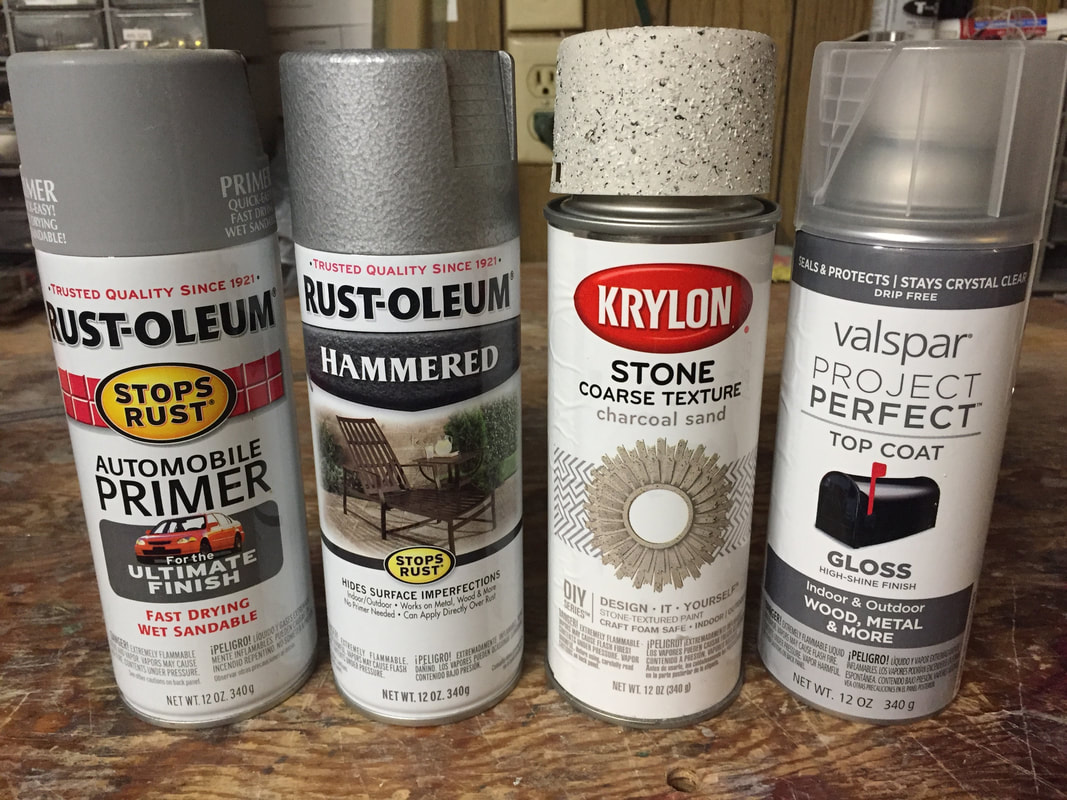
  • spray texture:  I used Krylon Stone Coarse Texture in rattle can (White Onyx color, but it's going to be covered with primer...)
  • remove the masking for the IP and seats
  • spray primer: I used Krylon flat gray primer (rattle can)
  • spray finish paint:  I used Rustoleum Hammered Silver (rattle can).  It didn't really come out looking all that "hammered" but the idea was to have the surface color work with the texture to hide patterns below.
What I observed, was that even more texture would be needed to hide some of the seams I had.  I'm not trying to build a show plane, but I do want it to look good.  So I've returned to some seams and applied a little bit of micro again and sanded, and will try to touch them up when I paint the rear compartment.  This will also be a good test of touch-up technique for later when I'm sure I'll have to do something like this again...

UPDATE on COLOR:
​I discovered a big part of why my paint scheme wasn't hiding the seams and glass weave texture when I went back to re-paint some spots that already had the hammered paint on them with the coarse texture underneath:  I wasn't leveraging the color enough from the texture.  When I sprayed a little of the Charcoal Sand colored Krylon Stone Coarse Texture OVER the hammered paint it looked great and hid everything!  SO: I adjusted my paint schedule for the rear cockpit area:
  • flat gray primer 
  • hammered silver (Rustoleum)
  • Krylon Stone Coarse Texture - Charcoal Sand
  • Clear coat
Others have written on the durability of interior paints, ALL of the options, and I'm hoping that the clear coat helps in this area.  It's not a very thick coat from these spray cans, so I might brush on some thicker stuff in high wear areas later.
NOTE: I still have all electrical and engine integration so I'm climbing in and out a lot.  I use a thick sheet on the floor in hopes that it will prevent wear from my shoes before I even get to fly.  I find that I need to get in the back seat area much more than the front seats, because I can reach into the front area from the sides, but it's much harder for the back seat/firewall area with the strakes now on...

Picture
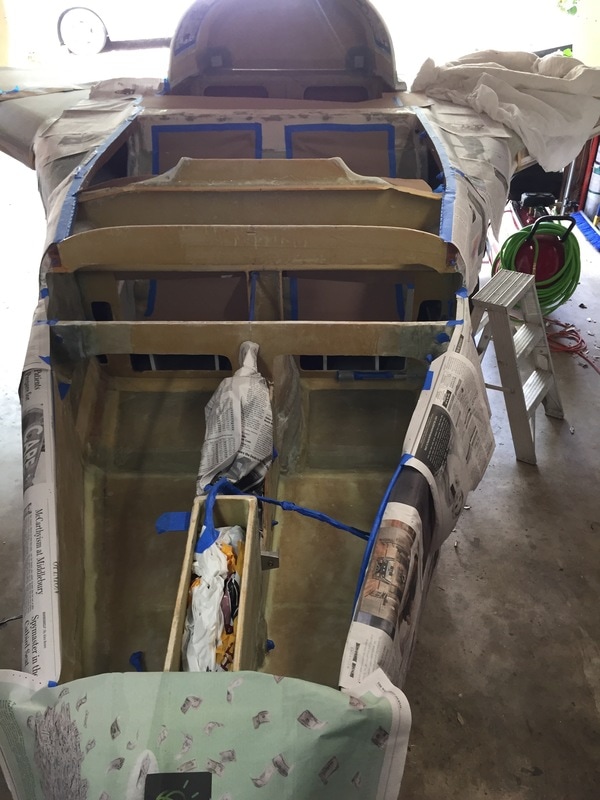
Here's a look at the masking process before I prime and paint for forward portion of the interior
Picture
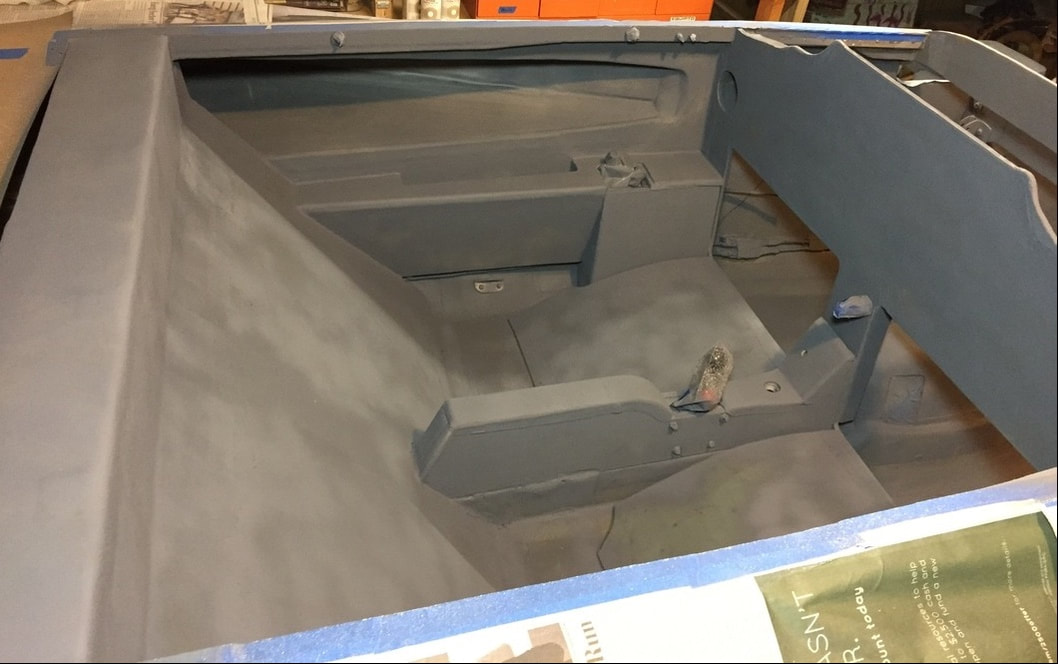
Front seat area after primer...
Picture
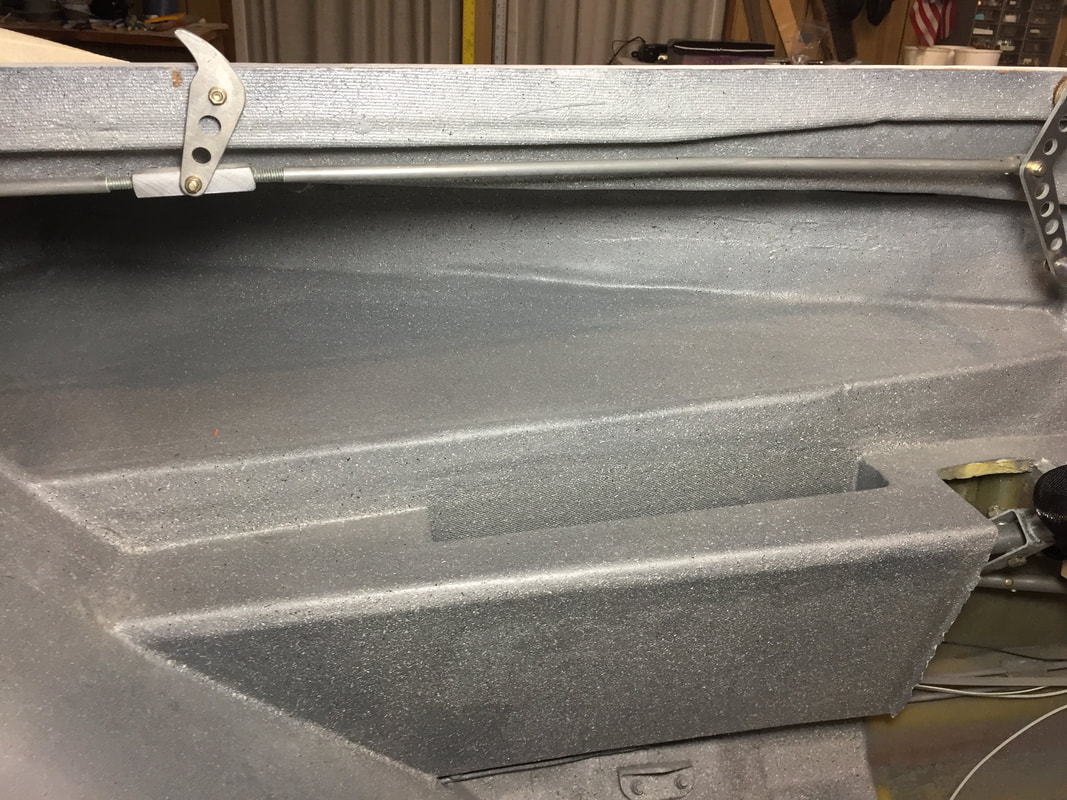
Closer view of the interior after all 4 coatings
Picture
The rattle can line-up of what I used on the interior

Proudly powered by Weebly